

10 Tips To Keep Your Flowers Fresh Longer

Receiving flowers is always a delight! Whether the occasion is celebratory or somber, it means that the person gifting them has you in their thoughts.
Flowers, like other perishable items, are a way to share one’s feelings with the receiver without the gift becoming just another piece of clutter around the house after a while. This is part of why they are considered a “safe” gift even for someone who you might not know very well yet. Regardless of whether the recipient has a green thumb or not, no one can deny the timeless beauty of fresh flowers. Other perishable gifts like food, or even an activity like a vacation or spa day, are meant to be an experience for the one they’re given to. The same goes for flowers. After they are gone, they don’t stay packed away in a box or back of a cabinet somewhere- the memories stay in the recipient’s heart.
Even though they are meant to die eventually, of course we want to keep that thoughtful gift of flowers looking its best for as long as we can!
The truth is, from the moment a flower in a field is cut- it’s already dying. Without support, it has no access to the moisture or nutrients provided by the soil it once grew in. However, it doesn’t show signs of wilting until later. While flowers aren’t generally thought to be the same as other vegetable produce, they are both plant material which needs certain environmental factors to be in their favor in order for them not to go bad too quickly.
The main environmental factors that impact a cut flower’s lifespan are temperature, moisture, and light exposure.
-
Temperature
-
Cooler is better! Ideally, flowers should be kept in areas that are room temperature or lower. We recommend 72-75°F at the warmest. 65-70°F is ideal, but understandably not always possible during warmer parts of the year.
-
Even though they should be kept cold- do not place them in the direct line of fans or other air conditioning. Commonly, dining tables, coffee tables, and kitchen islands are popular places to display your bouquet- but take a quick look at the ceiling before setting your flowers there! These same areas are very likely to be right under fans and ventilation, and having a constant breeze blown at them will cut down on the flowers lifespan significantly. Imagine how dry you would feel if your face was under a fan all day!
-
Moisture
-
Our arrangements come in a variety of containers, or possibly none at all for hand-tied bouquets.
-
-
Arrangements in clear glass vases are the most straightforward for taking care of- their water level is visible, so you can see if you need to add more water. The only drawback is that sometimes the water can become cloudy over time due to residue from the stems. If needed, most vases allow you to gently pour the old water out, and you can part the flowers to refill the vase.
-
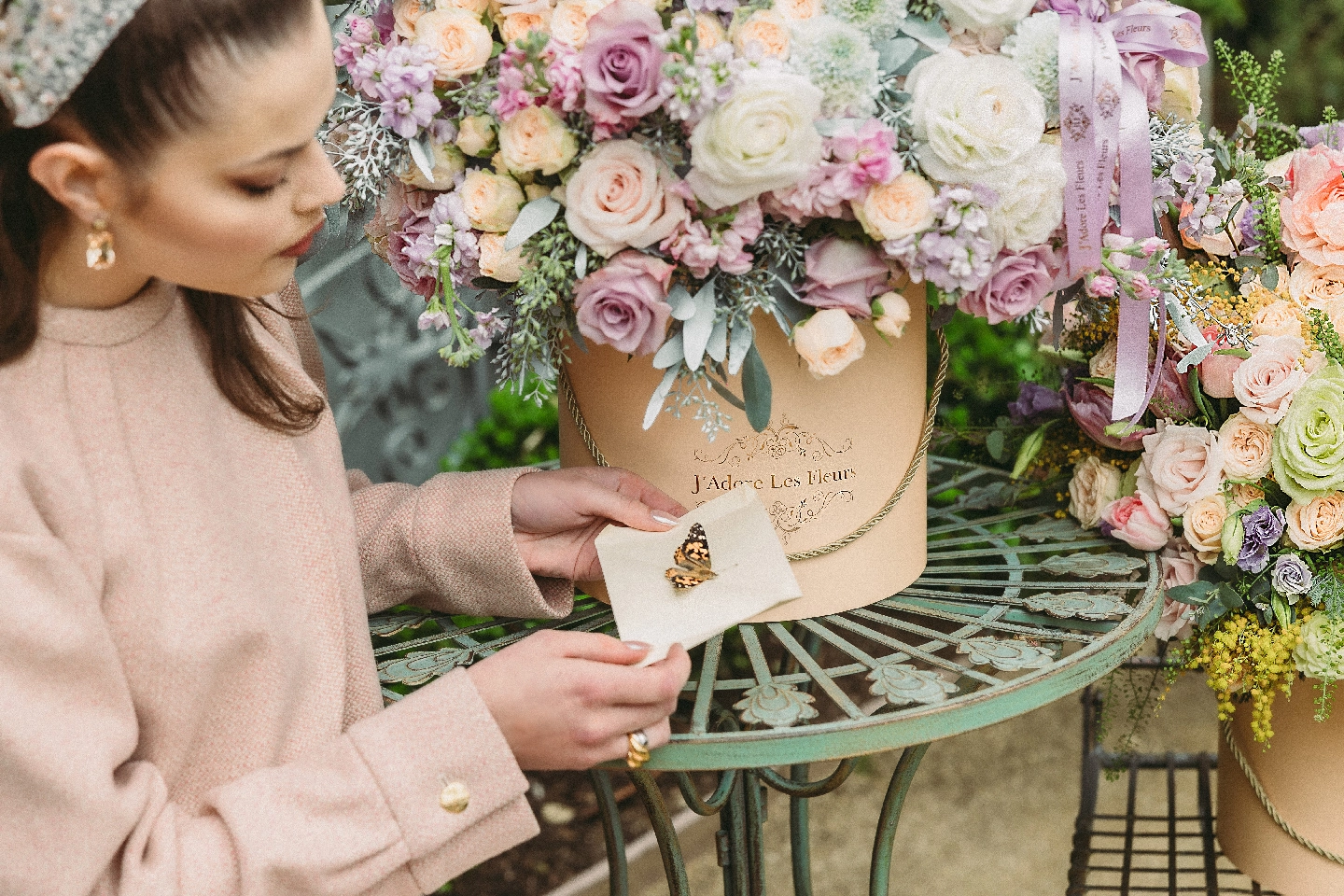
If the arrangement is in a vase that isn’t clear, or one of our signature boxes, the flowers are most likely sitting in what is called floral foam. It’s a material that retains water and holds the flower stems in place at the same time. The water in it gets syphoned by the flowers in it, and evaporates over time, so we suggest adding additional water over the lifespan of your floral arrangement- about 3-10 ounces (or ½ - 1 ¼ cup) depending on the size of the arrangement every-other day (starting the day after you receive your arrangement). If you’re not sure how much water to add, start with less and make sure the water does not overflow before adding more.
-
Hand-tied bouquets are often more about the impact of the moment of giving it than its longevity after, but of course it’s better when the flowers are still in good shape in the following days! Your bouquet may or may not have a water source attached- you can check by holding the bouquet up and looking around the base of the stems. If they are bare, you can use a branch pruner or strong kitchen scissors to cut the stems. When plants are cut, they dry out at the point of the cut much like how humans and animals can form scabs. By cutting the stems, it breaks that barrier and allows them to better absorb water again. If the bouquet has plastic around the stems, it means there is some water included. Transferring the bouquet to a vase is still ideal, so we recommend cutting the plastic around the stems over your sink to allow that water to drain out before removing the plastic and transferring the bouquet to a vase.
-
Flowers are affected by both the amount of water they take in with their stems, as well as humidity. Flowers that are overwatered or kept in a high-humidity environment are more likely to go moldy as they wilt, while flowers that are underwatered or in a dry environment are more likely to shrivel up and have less or no mold. If there are wilted petals in a rose or other flowers with numerous petals, you can pluck them off- in a high-humidity environment, this will hinder the decay from spreading; and in a low-humidity environment, it means there will be fewer petals competing for water.
-
Hydrangeas (often included in the back of arrangements in our signature boxes) are especially sensitive to dryness. They often take in even more water from the air than they do from their stems! Misting them with water is a great way to keep them hydrated and fluffy!
-
All flowers are sensitive to the humidity of their environment- and prefer stability. For these reasons, we generally do not recommend traveling long distances with flowers, especially on airplanes. There are fluctuations in air pressure and temperature that are very severe- as well as an extreme lack of humidity. The average humidity on a plane is between 10%-20%. For comparison, the average humidity of the saharah desert is 25%. Depending on where you depart and land, there are also issues that come up concerning how much liquid you can bring, as well as laws around what vegetation you can bring from one place to another. With all of those factors combined, we generally recommend against flying with flowers.
-
Light
-
Lastly, even cut flowers still benefit from getting some sunlight in moderation. We recommend placing them in indirect sunlight- somewhere far enough from the window to avoid excess heat, but still get exposed to sunlight.
-
All flowers, even after they have been cut, are able to sense light or its absence in their environment. Plant cells have a protein component called photoreceptors, and they sense light and trigger certain biological processes in the plant. To put it simply, these sensors take in light, and send signals to the plant that cause it to expend more energy during the day, and “sleep” (expend far less energy) at night. They have a circadian rhythm like other living things. This means that while it is good to expose them to light during the day, they also need a dark environment at night. Avoid placing them next to or under lamps or night lights that are on for long periods after sundown.
Even the freshest, best quality flowers need support to last more than a day or two in the home. Don’t let the experience of having a lovely piece of nature provided by someone who cares for you go to waste!
For more information about our florals, visit https://www.jadorelesfleurs.com, or call your local JLF boutique.
Follow along on Instagram: @jadorelesfleurs

Subscribe to Our Newsletter
Stay updated about our new products, promotions and events